

Negotiation
Is there another topic that has drastically changed our political culture in the last two years? There is a new, strongest-take-it-all mentality. How will the dealmaking culture impact all of us? How can you come to a solution and make things possible, even if you don’t see an agreement on the horizon?
The topic is crucial to us on so many levels: how to apply it with family and friends, then within your business context, and, as a third level, how we, as a society, can conduct national and international negotiations that allow us to survive and benefit from each other.
Prof. Magret Neale’s Approach
The Science of Negotiation – Influencing your outcome with the other party in mind. A “negotiation is about finding a solution to your counterpart’s problem that makes you better off than you would have been had you not negotiated,” Neale says.
Five-step road map to negotiating
Assess: Look at the situation and decide if this is a place where you can negotiate: “Can I change the outcome in a way that makes me better off?” If the answer to your assessment is yes, then move on to stage two.
Prepare: The key is to figure out as much as you can about where you stand and where your counterpart stands prior to negotiating. “People may have positions, but those positions may have very little to do with what is driving the issue or dispute,” writes Neale.
Ask: Conventional negotiating wisdom holds that “whoever makes the first offer loses the negotiation.” There are ways to make that first offer more appealing: The more objective your first offer appears, the more value you’re likely to get.
Package: Packaging is an especially valuable tactic when you are the party with less power in a negotiation. If you can work hard enough to find creative sources of value, you can design a package that is more likely to be accepted and is a better value for you.
Adopt a Powerful Mindset
Expectations are incredibly influential, including your expectations of yourself. Neale suggests that adopting a powerful mindset at the negotiation table is easier and more formulaic than you think.
Experimenting with our format
There is nothing better in learning than learning from a great teacher. We know that Maggie is one of the best, and we are proud to celebrate our tenth anniversary of AsFarAs with her. Because of Maggie, we will adopt our AsFarAs format into an interactive learning session led by Maggie We are convinced that learning from a legend will be a life lesson for all of our participants.
About Our Thought Leader
Maggie Neale
Margaret A. Neale is an emerita professor of the Adams Distinguished Professor of Management, Graduate School of Business at Stanford University. Director of the Managing Teams for Innovation and Success Executive Program. Director of the Influence and Negotiation Strategies Executive Program Co-director of the Executive Program for Women Leaders.
Margaret Neale’s research focuses primarily on negotiation and team performance. Her work has extended research on judgment and decision-making from cognitive psychology to the field of negotiation. In particular, she studies cognitive and social processes that lead to departures from effective negotiation behavior. Within the context of teams, her work explores aspects of team composition and group processes that enhance teams’ ability to share the information necessary for learning and problem-solving in both face-to-face and virtual team environments.
She received her Bachelor’s degree in Pharmacy from Northeast Louisiana University, her Master’s degrees from the Medical College of Virginia and Virginia Commonwealth University, and her PhD in Business Administration from the University of Texas. She began her academic career as a member of the faculty at the University of Arizona’s Eller School of Management. Professor Neale’s major research interests include bargaining and negotiation, distributed work groups, and team composition, learning, and performance. She is the author of over 70 articles on these topics and is a coauthor of four books: Organizational Behavior: A Management Challenge (third edition) (with L. Stroh and G. Northcraft) (Erlbaum Press, 2002); Cognition and Rationality in Negotiation (with M.H. Bazerman) (Free Press, 1991); Negotiating Rationally (with M.H. Bazerman) (Free Press, 1992). Her latest book is “Getting (More of) What You Want” (coauthored with Thomas Lys).
In addition to her teaching and research activities, Professor Neale has conducted executive seminars and management development programs in the United States, United Kingdom, Australia, Holland, Switzerland, Brazil, Thailand, France, Canada, Nicaragua, the People’s Republic of China, Hong Kong, United Arab Emirates, Mexico, Israel, and Jamaica for public agencies, city governments, health care and trade associations, universities, and Fortune 500 corporations in the area of negotiation skills, managerial decision making, managing teams, and workforce diversity.
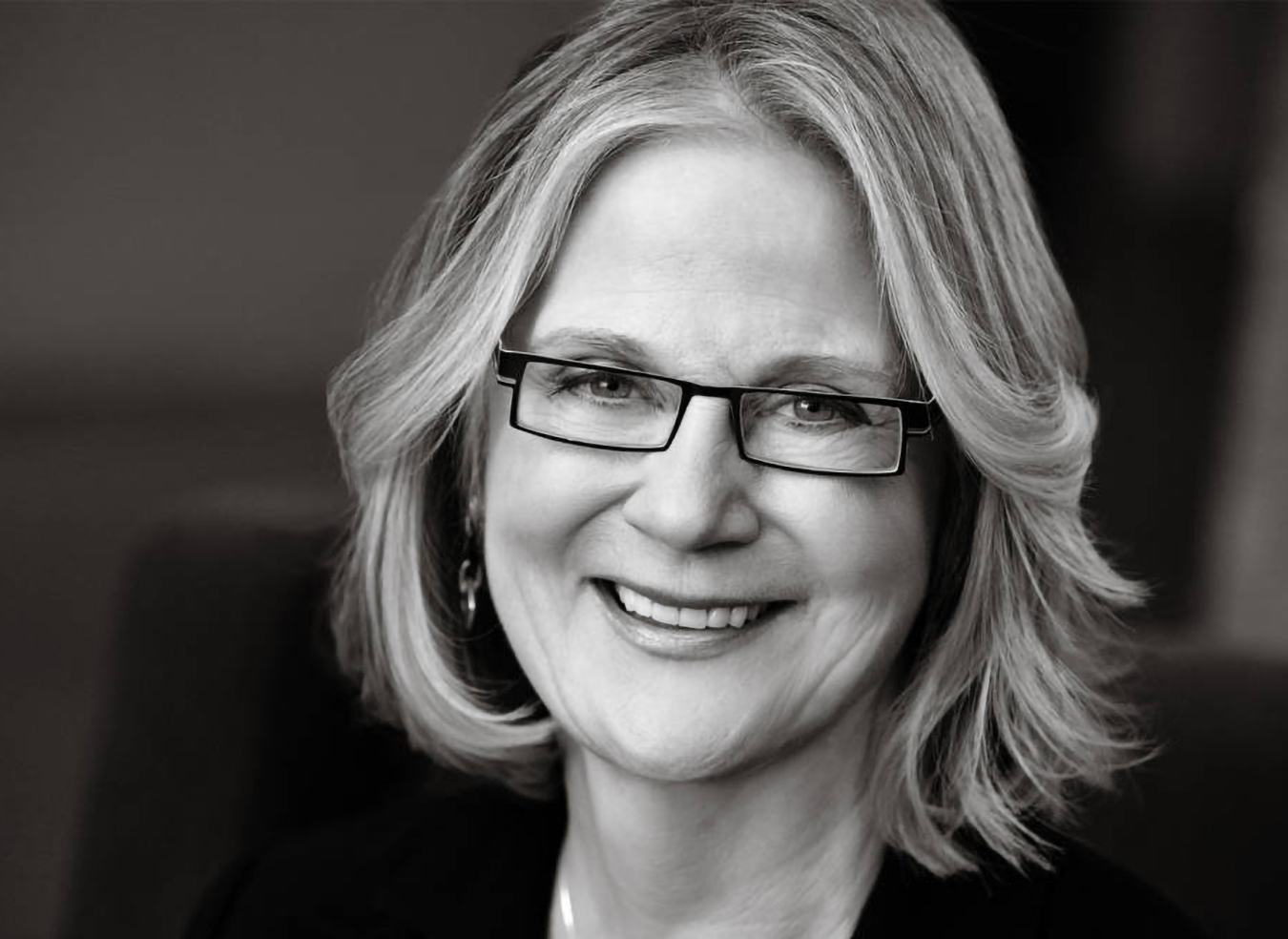 Margaret Ann Neale